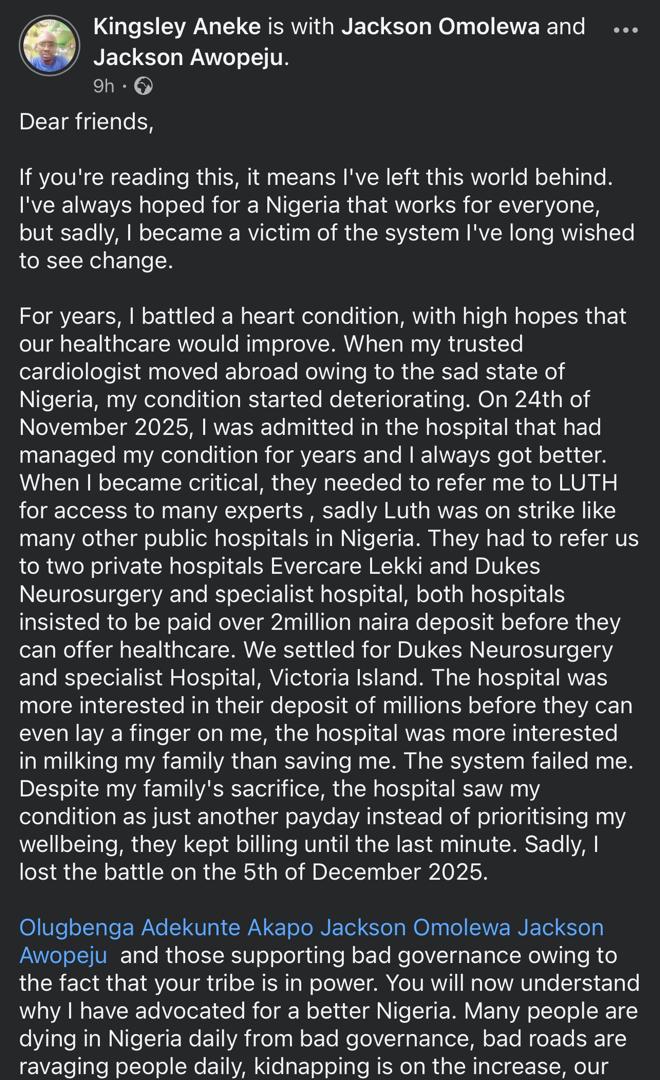
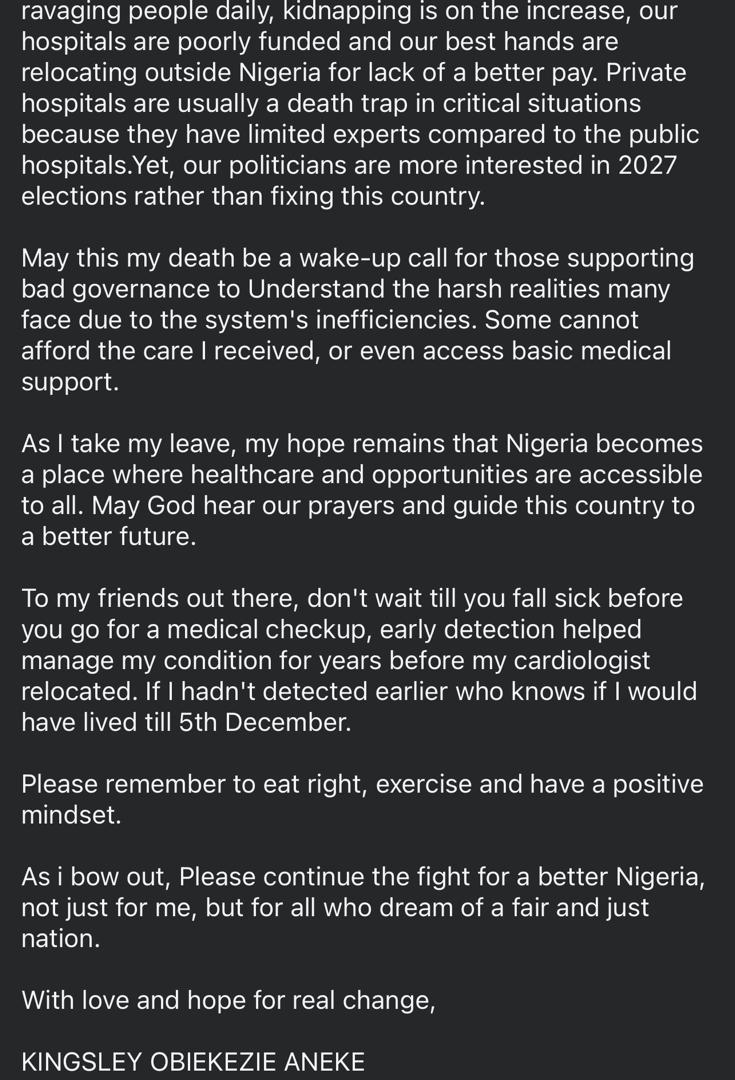
A Nigerian man, identified as Kingsley Aneke, has reportedly written his own tribute before his death, drawing attention to the challenges within Nigeria’s healthcare system and the impact of medical brain drain. Eyes Of Lagos reports,
In a post shared on his Facebook page shortly before his passing, Aneke revealed that he had lived with a heart condition for several years, stating that early diagnosis had helped him manage the illness for a long time.
“For years, I battled a heart condition, with high hopes that our healthcare would improve,” he wrote.
He noted that his health began to deteriorate after his long-time cardiologist relocated abroad, a situation he linked to the ongoing migration of medical professionals and the declining state of healthcare in the country.
According to the post, Aneke was admitted on November 24, 2025, to a hospital that had managed his condition over the years. However, when his condition became critical, doctors reportedly attempted to refer him to the Lagos University Teaching Hospital (LUTH) for specialist care.
The referral could not be completed, as the hospital was reportedly shut down due to an industrial strike.
With public healthcare facilities unavailable, Aneke said his family sought urgent medical attention from private hospitals, including Evercare Hospital, Lekki, and Dukes Neurosurgery and Specialist Hospital.
He alleged that the hospitals demanded deposits running into millions of naira before treatment could commence.
“The hospital was more interested in milking my family than saving me,” he wrote.
Aneke reportedly passed away on December 5, 2025.
In his final message, he urged Nigerians to prioritise regular medical checkups and continue to advocate for a healthcare system where access to quality treatment is not determined by wealth but recognised as a fundamental human right.
His story has since generated widespread reactions online, reigniting debates on healthcare reform, medical brain drain, industrial actions in public hospitals, and the high cost of life-saving treatment in Nigeria.