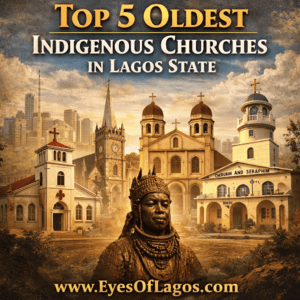
Lagos State is not just Nigeria’s commercial capital — it is also one of the birthplaces of Christianity in the country. The spread of Christianity in Lagos began in the 19th century when missionaries arrived through coastal towns like Badagry before expanding into Lagos Island and other regions.
Over time, indigenous congregations emerged, blending African culture with Christian worship. Today, several historic churches still stand as symbols of faith, resilience, and cultural transformation. Eyes Of Lagos reports,
Here are the top 5 oldest indigenous churches in Lagos State and their historical significance.
1. Methodist Church Nigeria (Founded 1842 – Badagry/Lagos)
The Methodist Church is widely recognized as the first Christian mission established in Nigeria, beginning in Badagry in 1842 under the leadership of Rev. Thomas Birch Freeman. From this early base, Christianity spread into Lagos and other parts of southwestern Nigeria.
The church played a major role in education and social development, establishing some of the earliest schools in Lagos. Many historic Methodist congregations in Lagos today trace their origins to this early mission movement.
Why it’s significant:
-
First organized Christian mission in Lagos region
-
Pioneer of Western education in Lagos
-
Strong indigenous leadership development
2. Anglican Church of Nigeria (CMS Mission – 1842)
The Anglican Church, originally introduced through the Church Missionary Society (CMS), also began its work in Badagry in 1842 shortly after the Methodist mission. One of its most influential figures was Bishop Samuel Ajayi Crowther, the first African Anglican bishop who translated the Bible into Yoruba.
Historic Anglican churches across Lagos Island remain some of the oldest Christian worship centers in the state.
Why it’s significant:
-
Strong connection with indigenous clergy
-
Translation of Bible into local language
-
Major role in education and literacy
3. Roman Catholic Church (Established in Lagos 1860)
The Catholic Church officially began its mission in Lagos in 1860 through French missionaries. Over time, it grew rapidly and became one of the largest Christian denominations in Nigeria.
Historic Catholic cathedrals in Lagos Island are among the oldest Christian structures still in use today.
Why it’s significant:
-
Early missionary expansion into Lagos
-
Establishment of schools and hospitals
-
Massive long-term influence on Lagos society
4. Baptist Church Nigeria (Late 19th Century)
Baptist missionaries arrived in Lagos during the late 1800s, contributing significantly to indigenous church growth. The Baptist Church became known for evangelism, theological training, and education programs.
Many early Baptist congregations in Lagos developed local leadership quickly, helping Christianity become rooted among indigenous communities.
Why it’s significant:
-
Strong evangelism movement
-
Early Nigerian church leadership training
-
Expansion beyond Lagos into the interior
5. Cherubim and Seraphim (Founded 1925 – Indigenous Nigerian Church)
Unlike the earlier missionary churches, the Cherubim and Seraphim Church was founded by Nigerians and represents one of the earliest African Indigenous Churches (AICs) in Lagos.
Founded by Moses Orimolade Tunolase, the church incorporated African spirituality, prophetic worship, and indigenous music into Christian practice.
Why it’s significant:
-
One of the first African-founded churches in Lagos
-
Blend of African culture and Christianity
-
Huge influence on Pentecostal movements
The Historical Importance of Lagos Churches
The arrival of missionaries in Badagry in 1842 marked the beginning of modern Christianity in Nigeria. From there, churches expanded into Lagos Island and other communities, bringing education, literacy, and new cultural influences.
These early churches were not just religious centers — they were also:
-
Schools
-
Hospitals
-
Community development hubs
-
Cultural transformation institutions
Their legacy continues to shape Lagos society today
The oldest indigenous churches in Lagos State are more than historic buildings — they represent the spiritual foundation of Christianity in Nigeria. From missionary-established denominations to African-founded churches, Lagos remains a central pillar in the country’s religious history.
As Lagos continues to grow into a global megacity, these churches remain powerful reminders of the city’s past and its enduring faith heritage.